The video discusses how to calculate work when there are multiple forces acting on a system. It explains the calculation of the work done by individual forces and the net work done onto the system.


|
|
|||
|
|
|||
|
|


|
|
|
 Uploaded
|
|
0:00 |
|
|
|
|
0:05 | ||
|
|
0:10 |
|
|
|
|
0:15 | ||
|
|
0:20 | ||
|
|
0:25 |
|
|
|
|
0:30 | ||
The video explains the definition of kinetic energy for point mass and discrete mass systems. It covers the formula for kinetic energy for point masses, as well as the calculation of kinetic energy for discrete mass systems. It also discusses the unit of kinetic energy and how to calculate the total kinetic energy of a discrete mass system.
|
|
|||
|
|
|||
|
|
|
|
|
Uploaded
|
|
0:00 |
|
|
|
|
0:05 | ||
|
|
0:10 |
|
|
|
|
0:15 | ||
|
|
0:20 | ||
|
|
0:25 |
|
|
|
|
0:30 | ||
The video discusses the concept of converting work into energy and energy into work. It explains the relationship between work and mechanical energy, and how they are interchangeable. The video also covers the calculation of work done on a system by multiple forces and the relationship between work and kinetic energy.
|
|
|||
|
|
|||
|
|
|
|
|
Uploaded
|
|
0:00 |
|
|
|
|
0:05 | ||
|
|
0:10 |
|
|
|
|
0:15 | ||
|
|
0:20 | ||
|
|
0:25 |
|
|
|
|
0:30 | ||
The video discusses the concept of potential energy and its relationship with the work energy theorem. It explains how conservative forces lead to zero work done and introduces the concept of potential energy as a state function. The video also explains the modification of the work energy theorem to include potential energy and its relevance to non-conservative forces.
|
|
|||
|
|
|||
|
|
|
|
|
Uploaded
|
|
0:00 |
|
|
|
|
0:05 | ||
|
|
0:10 |
|
|
|
|
0:15 | ||
|
|
0:20 | ||
|
|
0:25 |
|
|
|
|
0:30 | ||
This video discusses the concept of mechanical energy, including its two main forms: kinetic energy and potential energy. It also explores the relationship between mechanical energy and mechanical work, and how it is stored in different types of systems.
|
|
|||
|
|
|||
|
|
|
|
|
Uploaded
|
|
0:00 |
|
|
|
|
0:05 | ||
|
|
0:10 |
|
|
|
|
0:15 | ||
|
|
0:20 | ||
|
|
0:25 |
|
|
|
|
0:30 | ||
This video explains the concept of gravitational potential energy and how to define it, as well as the conditions under which the formula for gravitational potential energy is valid.
|
|
|||
|
|
|||
|
|
|
|
|
Uploaded
|
|
0:00 |
|
|
|
|
0:05 | ||
|
|
0:10 |
|
|
|
|
0:15 | ||
|
|
0:20 | ||
|
|
0:25 |
|
|
|
|
0:30 | ||
This video discusses the concept of spring potential energy, its definition, calculation, and assumptions. It also explains the formula for change in spring potential energy and how to calculate it in absolute terms. The video also covers the assumptions made by the examiner when calculating spring potential energy in physics problems.
|
|
|||
|
|
|||
|
|
|
|
|
Uploaded
|
|
0:00 |
|
|
|
|
0:05 | ||
|
|
0:10 |
|
|
|
|
0:15 | ||
|
|
0:20 | ||
|
|
0:25 |
|
|
|
|
0:30 | ||
A detailed explanation of power in physics, including average power, instantaneous power, and the relationship between power and force.
|
|
|||
|
|
|||
|
|
|
|
|
Uploaded
|
|
0:00 |
|
|
|
|
0:05 | ||
|
|
0:10 |
|
|
|
|
0:15 | ||
|
|
0:20 | ||
|
|
0:25 |
|
|
|
|
0:30 | ||
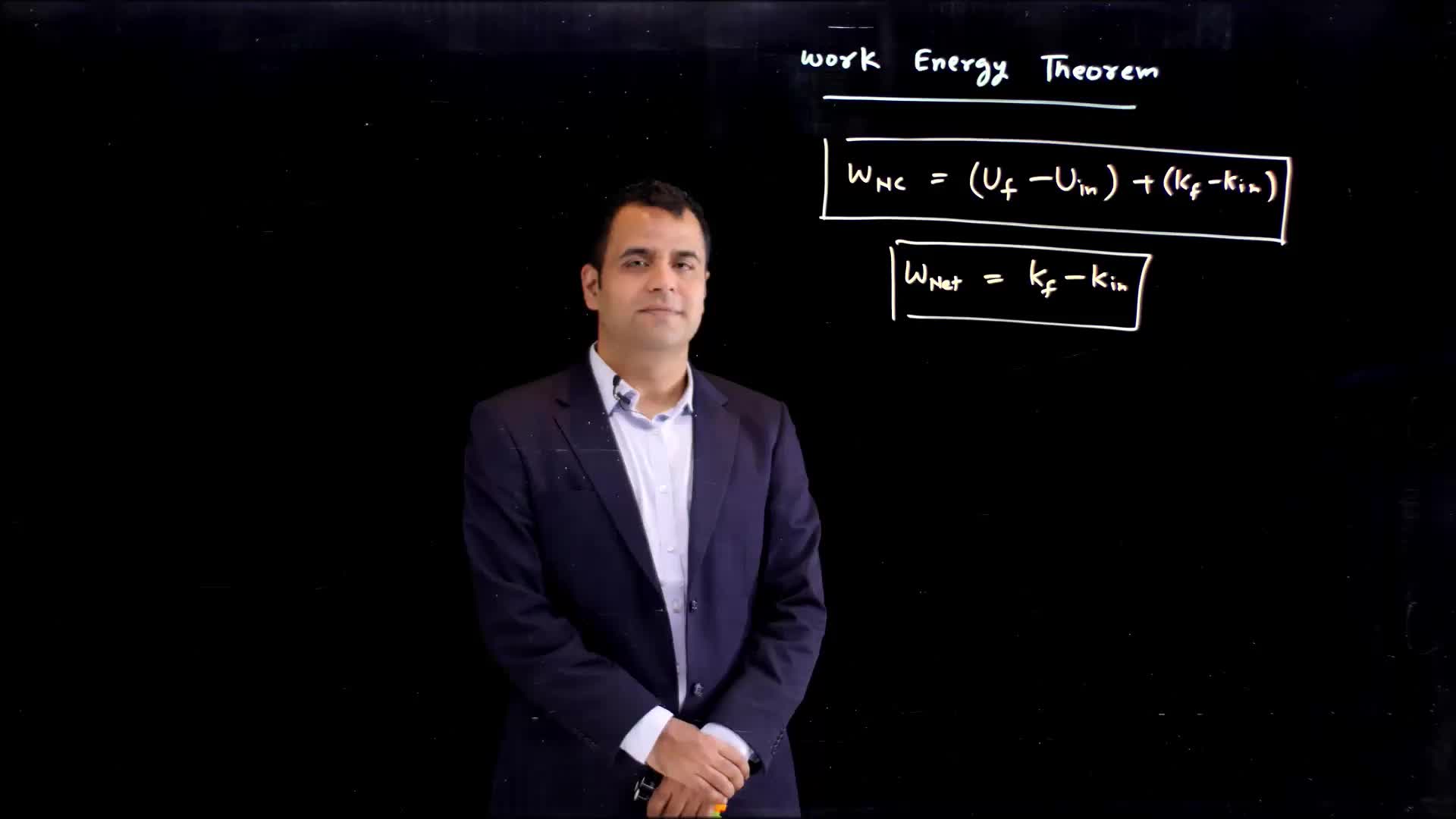
This video provides a detailed explanation of the work energy theorem, including the modification of the formula and division of forces into categories. It also discusses the significance of potential energy, kinetic energy, and the work done by external agents and friction forces. The video ends with a demonstration of a method to memorize the formula and a mention of the importance of understanding and utilizing the theorem.
|
|
|||
|
|
|||
|
|
|
|
|
Uploaded
|
|
0:00 |
|
|
|
|
0:05 | ||
|
|
0:10 |
|
|
|
|
0:15 | ||
|
|
0:20 | ||
|
|
0:25 |
|
|
|
|
0:30 | ||
The video explains how to solve problems using the work energy theorem. It covers the different cases and steps to follow when identifying conservative forces, calculating potential energy, and considering external agents or friction forces.
|
|
|||
|
|
|||
|
|
|
|
|
Uploaded
|
|
0:00 |
|
|
|
|
0:05 | ||
|
|
0:10 |
|
|
|
|
0:15 | ||
|
|
0:20 | ||
|
|
0:25 |
|
|
|
|
0:30 | ||
In this video, the instructor discusses the force method and work method for solving physics questions. The force method involves calculating all the forces, acceleration, and other factors, while the work method focuses on work done and energy of the system. The video also covers the definition of physical work and mechanical work, along with the formula for mechanical work and the concept of angle between force and displacement.
|
|
|||
|
|
|||
|
|
|
|
|
Uploaded
|
|
0:00 |
|
|
|
|
0:05 | ||
|
|
0:10 |
|
|
|
|
0:15 | ||
|
|
0:20 | ||
|
|
0:25 |
|
|
|
|
0:30 | ||
The video explains the concept of simple harmonic motion (SHM) and its connection to circular motion. It discusses the importance of studying SHM and how it can be connected to translatory and circular motions. It also explores the equations and components of SHM and their relationship to circular motion.
|
|
|||
|
|
|||
|
|
|
|
|
Uploaded
|
|
0:00 |
|
|
|
|
0:05 | ||
|
|
0:10 |
|
|
|
|
0:15 | ||
|
|
0:20 | ||
|
|
0:25 |
|
|
|
|
0:30 | ||
The video explains how to apply the conservation of momentum in collision scenarios. It covers the initial and final states of a system, the calculation of momentum, and the need for additional equations to solve for the unknowns in the system.
|
|
|||
|
|
|||
|
|
|
|
|
Uploaded
|
|
0:00 |
|
|
|
|
0:05 | ||
|
|
0:10 |
|
|
|
|
0:15 | ||
|
|
0:20 | ||
|
|
0:25 |
|
|
|
|
0:30 | ||
The video discusses the conservation of momentum when bodies collide, and the inability to apply force or energy methods due to the changing forces during collision. It explains the internal forces and their impact on momentum conservation.
|
|
|||
|
|
|||
|
|
|
|
|
Uploaded
|
|
0:00 |
|
|
|
|
0:05 | ||
|
|
0:10 |
|
|
|
|
0:15 | ||
|
|
0:20 | ||
|
|
0:25 |
|
|
|
|
0:30 | ||
The video discusses the three broad types of collision in physics: elastic collision, perfectly inelastic collision, and inelastic collision. It explains the concept of kinetic energy conservation and how it applies to each type of collision.
|
|
|||
|
|
|||
|
|
|
|
|
Uploaded
|
|
0:00 |
|
|
|
|
0:05 | ||
|
|
0:10 |
|
|
|
|
0:15 | ||
|
|
0:20 | ||
|
|
0:25 |
|
|
|
|
0:30 | ||
The video explains how to calculate the final velocities of two particles in an elastic collision using conservation of momentum and kinetic energy. It goes through the equations and conditions required to solve for the unknown velocities.
|
|
|||
|
|
|||
|
|
|
|
|
Uploaded
|
|
0:00 |
|
|
|
|
0:05 | ||
|
|
0:10 |
|
|
|
|
0:15 | ||
|
|
0:20 | ||
|
|
0:25 |
|
|
|
|
0:30 | ||
The video explains the concept of hadron collision, specifically focusing on perfectly elastic collisions and the conservation of momentum and kinetic energy before and after the collision. It also discusses the equations involving velocity and how to calculate the values of v1 and v2.
|
|
|||
|
|
|||
|
|
|
|
|
Uploaded
|
|
0:00 |
|
|
|
|
0:05 | ||
|
|
0:10 |
|
|
|
|
0:15 | ||
|
|
0:20 | ||
|
|
0:25 |
|
|
|
|
0:30 | ||
This video explains the process of calculating the velocities of two particles in a head-on inelastic collision. The collision involves two particles of different masses moving towards each other and then moving in the same direction after the collision. The video goes through the equations and calculations needed to solve for the velocities of the particles after the collision.
|
|
|||
|
|
|||
|
|
|
|
|
Uploaded
|
|
0:00 |
|
|
|
|
0:05 | ||
|
|
0:10 |
|
|
|
|
0:15 | ||
|
|
0:20 | ||
|
|
0:25 |
|
|
|
|
0:30 | ||
Explanation of the physics behind perfectly inelastic collisions, including the calculation of final velocities using the conservation of momentum equation.
|
|
|||
|
|
|||
|
|
|
|
|
Uploaded
|
|
0:00 |
|
|
|
|
0:05 | ||
|
|
0:10 |
|
|
|
|
0:15 | ||
|
|
0:20 | ||
|
|
0:25 |
|
|
|
|
0:30 | ||
The video introduces and defines linear momentum for different types of systems, such as point mass and discrete mass system.
|
|
|||
|
|
|||
|
|
|
|
|
Uploaded
|
|
0:00 |
|
|
|
|
0:05 | ||
|
|
0:10 |
|
|
|
|
0:15 | ||
|
|
0:20 | ||
|
|
0:25 |
|
|
|
|
0:30 | ||
The video discusses the relationship between force and momentum, exploring the concept through Newton's second law and its modified form. It also delves into the impact of non-zero forces on the momentum of a system.
|
|
|||
|
|
|||
|
|
|
|
|
Uploaded
|
|
0:00 |
|
|
|
|
0:05 | ||
|
|
0:10 |
|
|
|
|
0:15 | ||
|
|
0:20 | ||
|
|
0:25 |
|
|
|
|
0:30 | ||
The video discusses the different methods for solving collision problems, highlighting the limitations of force and energy methods and introducing the conservation of momentum method and the center of mass concept.
|
|
|||
|
|
|||
|
|
|
|
|
Uploaded
|
|
0:00 |
|
|
|
|
0:05 | ||
|
|
0:10 |
|
|
|
|
0:15 | ||
|
|
0:20 | ||
|
|
0:25 |
|
|
|
|
0:30 | ||
The video discusses the connection between simple harmonic motion (SHM) and circular motion. It explains how SHM components can be combined to create circular motion, and how circular motion can be broken down into SHM components. It also explores the importance of studying SHM and its connection to translatory and circular motion.
|
|
|||
|
|
|||
|
|
|
|
|
Uploaded
|
|
0:00 |
|
|
|
|
0:05 | ||
|
|
0:10 |
|
|
|
|
0:15 | ||
|
|
0:20 | ||
|
|
0:25 |
|
|
|
|
0:30 | ||
A detailed explanation of how to calculate the time period and frequency for a spring mass system and determining whether simple harmonic motion is occurring. Includes the calculation of forces, formulation of the differential equation, and a discussion of the independence of Omega and time period from external factors.
|
|
|||
|
|
|||
|
|
|
|
|
Uploaded
|
|
0:00 |
|
|
|
|
0:05 | ||
|
|
0:10 |
|
|
|
|
0:15 | ||
|
|
0:20 | ||
|
|
0:25 |
|
|
|
|
0:30 | ||
Learn about the changes in the formula for a simple pendulum when modifying the system by adding mass or acceleration. Also, discover the torque and differential equations when moving the hinge in different directions.
|
|
|||
|
|
|||
|
|
|
|
|
Uploaded
|
|
0:00 |
|
|
|
|
0:05 | ||
|
|
0:10 |
|
|
|
|
0:15 | ||
|
|
0:20 | ||
|
|
0:25 |
|
|
|
|
0:30 | ||
The video discusses tricks for calculating the behavior of a simple pendulum when it is subjected to different types of acceleration.
|
|
|||
|
|
|||
|
|
|
|
|
Uploaded
|
|
0:00 |
|
|
|
|
0:05 | ||
|
|
0:10 |
|
|
|
|
0:15 | ||
|
|
0:20 | ||
|
|
0:25 |
|
|
|
|
0:30 | ||
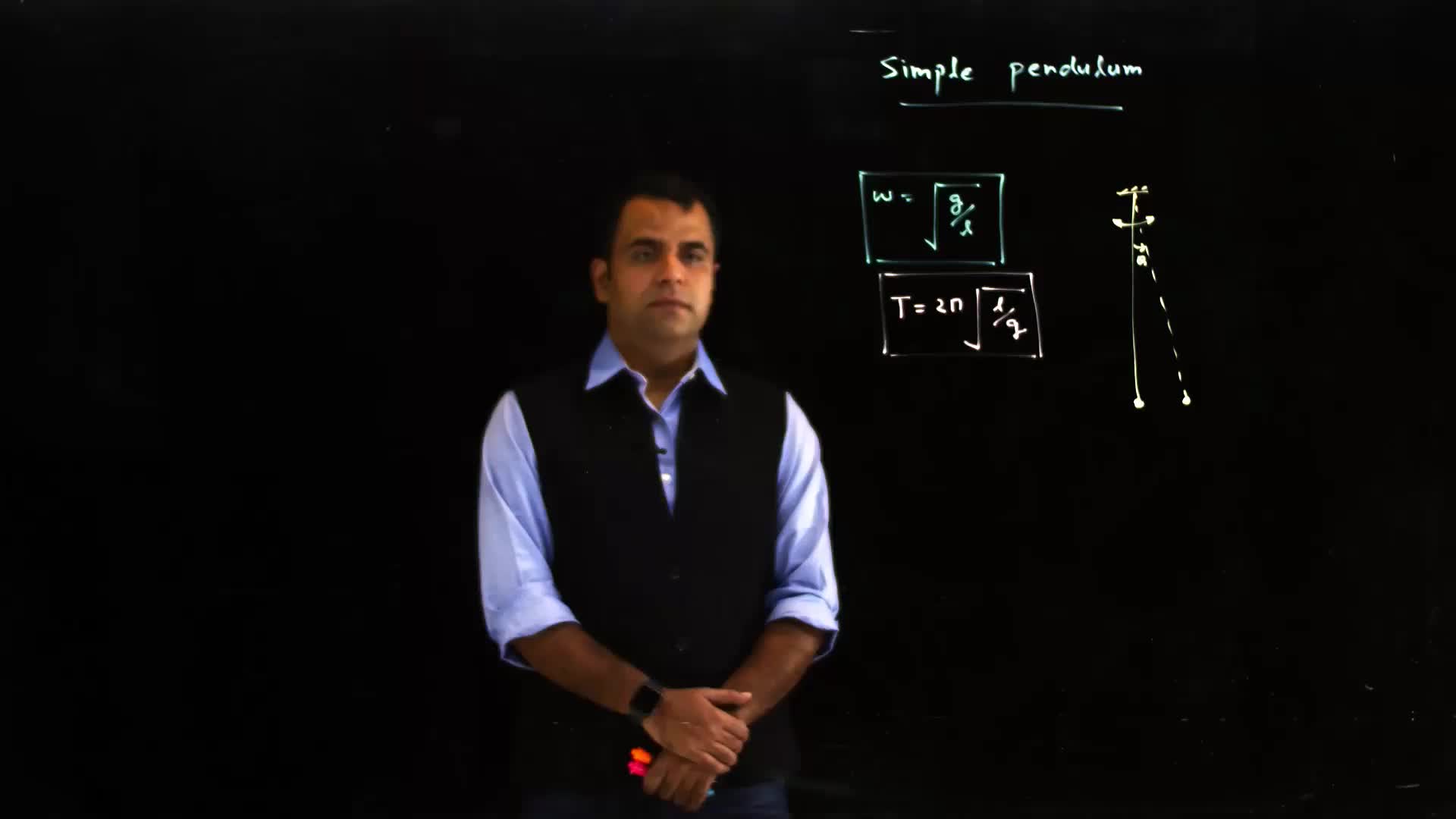
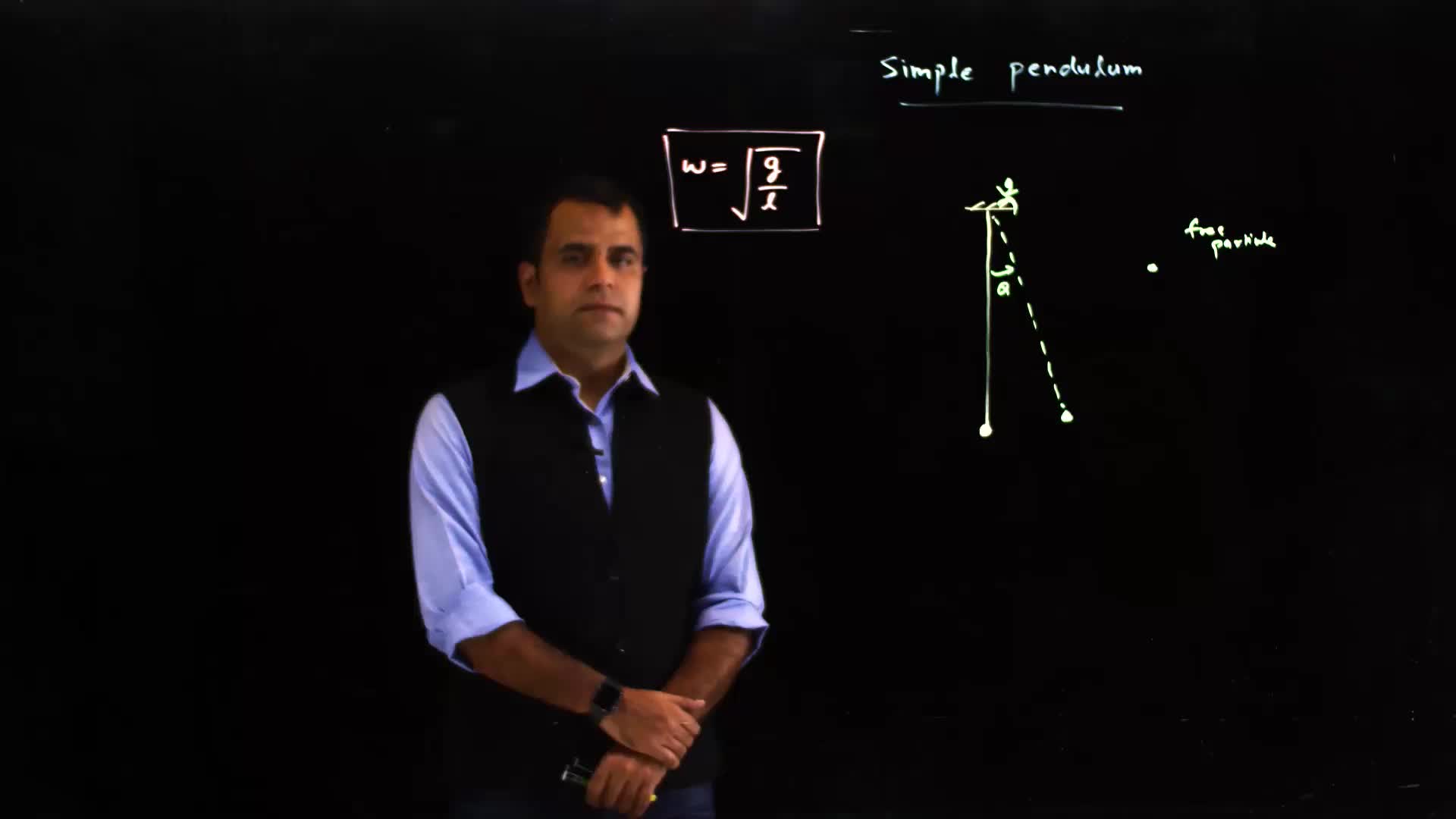
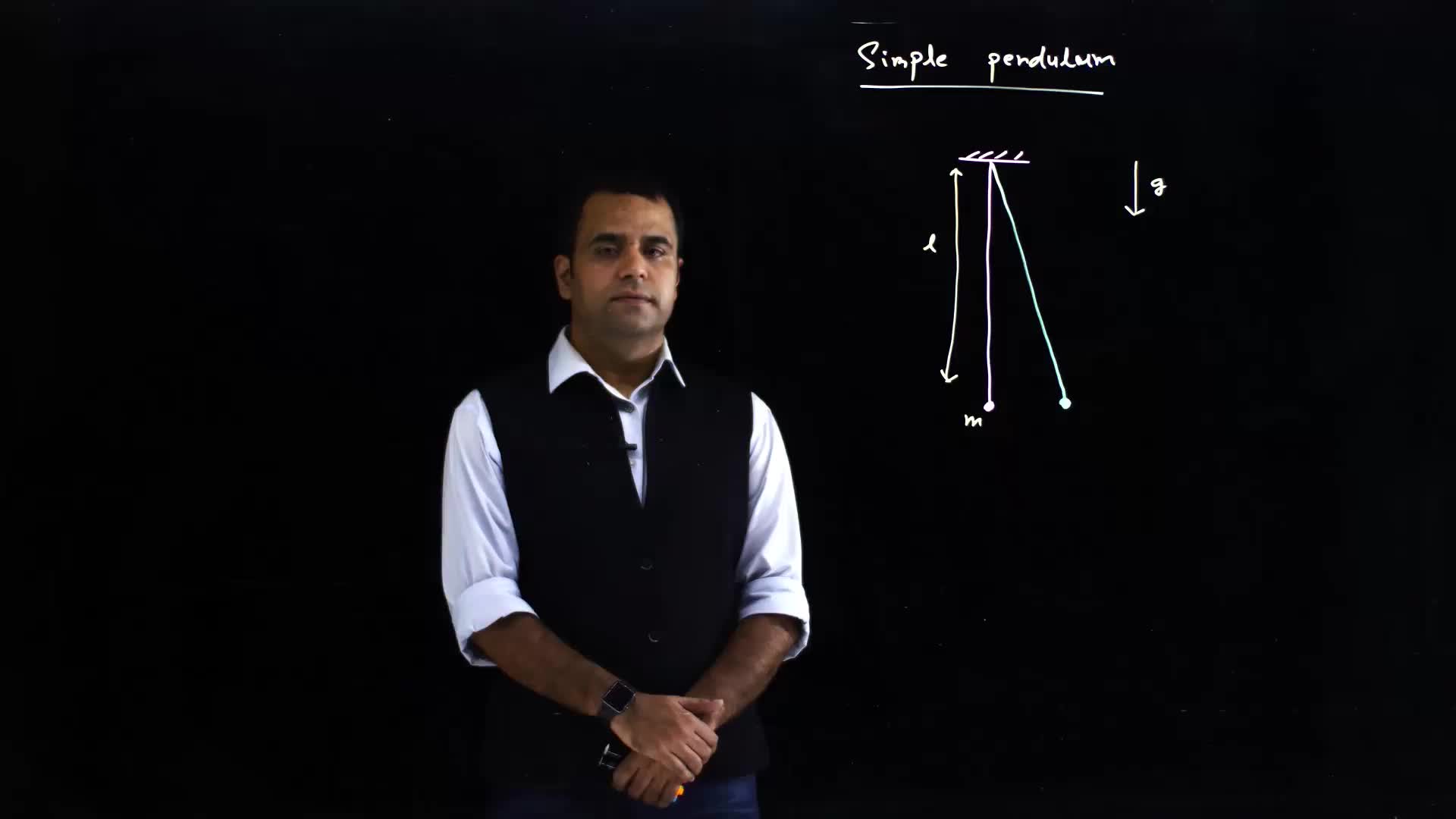
The video discusses the motion of a simple pendulum, beginning with the setup of the device and the study of its motion. It then delves into the calculation of the restoring force, acceleration, and the equation for the motion of the simple pendulum. The video concludes with the explanation of how the time period and frequency of the simple pendulum are affected by external factors such as gravity.
|
|
|||
|
|
|||
|
|
|
|
|
Uploaded
|
|
0:00 |
|
|
|
|
0:05 | ||
|
|
0:10 |
|
|
|
|
0:15 | ||
|
|
0:20 | ||
|
|
0:25 |
|
|
|
|
0:30 | ||
The video introduces the equation for simple harmonic motion and discusses its various components and conditions. It also explains the relationship between angular frequency and time period, as well as the conditions required for studying simple harmonic motion.
|
|
|||
|
|
|||
|
|
|
|
|
Uploaded
|
|
0:00 |
|
|
|
|
0:05 | ||
|
|
0:10 |
|
|
|
|
0:15 | ||
|
|
0:20 | ||
|
|
0:25 |
|
|
|
|
0:30 | ||
This video explains the process of solving for simple harmonic motion (SHM) using formulas and equations. It discusses how to calculate the force, acceleration, and motion of a system in SHM and how to apply the derived formulas to solve problems.
|
|
|||
|
|
|||
|
|
|
|
|
Uploaded
|
|
0:00 |
|
|
|
|
0:05 | ||
|
|
0:10 |
|
|
|
|
0:15 | ||
|
|
0:20 | ||
|
|
0:25 |
|
|
|
|
0:30 | ||
The video discusses the analysis of simple harmonic motion, including the calculation of velocity and acceleration as functions of both time and position. The equations for velocity and acceleration are derived and explained, as well as the relationship between velocity, acceleration, and the position of the particle. Additionally, the conditions for simple harmonic motion are discussed in detail.
|
|
|||
|
|
|||
|
|
|
|
|
Uploaded
|
|
0:00 |
|
|
|
|
0:05 | ||
|
|
0:10 |
|
|
|
|
0:15 | ||
|
|
0:20 | ||
|
|
0:25 |
|
|
|
|
0:30 | ||
Learning about series spring combination, effective spring constant, and system performing SHM.
|
|
|||
|
|
|||
|
|
|
|
|
Uploaded
|
|
0:00 |
|
|
|
|
0:05 | ||
|
|
0:10 |
|
|
|
|
0:15 | ||
|
|
0:20 | ||
|
|
0:25 |
|
|
|
|
0:30 | ||
The video explains the concept of physical pendulum motion, discussing the forces and torques involved, and the condition for simple harmonic motion (SHM) in physical pendulum motion.
|
|
|||
|
|
|||
|
|
|
|
|
Uploaded
|
|
0:00 |
|
|
|
|
0:05 | ||
|
|
0:10 |
|
|
|
|
0:15 | ||
|
|
0:20 | ||
|
|
0:25 |
|
|
|
|
0:30 | ||
The video discusses parallel spring combinations and how to determine if the system will perform SHM. It also explains how to simplify the system and calculate the equivalent spring constant.
|
|
|||
|
|
|||
|
|
|
|
|
Uploaded
|
|
0:00 |
|
|
|
|
0:05 | ||
|
|
0:10 |
|
|
|
|
0:15 | ||
|
|
0:20 | ||
|
|
0:25 |
|
|
|
|
0:30 | ||
The video discusses the calculation of the spring constant when a single spring is cut in an M N ratio. It provides equations for determining KM and KN in terms of the original spring constant K and the ratios M and N.
|
|
|||
|
|
|||
|
|
|
|
|
Uploaded
|
|
0:00 |
|
|
|
|
0:05 | ||
|
|
0:10 |
|
|
|
|
0:15 | ||
|
|
0:20 | ||
|
|
0:25 |
|
|
|
|
0:30 | ||
This video explains the concept of angle of contact, studied under surface tension, and discusses the forces experienced by a liquid in contact with a surface. It differentiates between adhesive and cohesive forces and explains how the balance of these forces affects the liquid's behavior, leading to different scenarios of contact angles. The video further explores examples such as glass-water and glass-mercury combinations to illustrate the concept better, and investigates how the angle of contact depends on the material properties of the liquid and vessel.
|
|
|||
|
|
|||
|
|
|
|
|
Uploaded
|
|
0:00 |
|
|
|
|
0:05 | ||
|
|
0:10 |
|
|
|
|
0:15 | ||
|
|
0:20 | ||
|
|
0:25 |
|
|
|
|
0:30 | ||
The lecture explores the impact of impulsive forces caused by liquid motion on a vessel and the conditions under which the vessel will move. It investigates the forces acting on the vessel, focusing on friction and its relationship with motion, using concepts of momentum change and impulse.
|
|
|||
|
|
|||
|
|
|
|
|
Uploaded
|
|
0:00 |
|
|
|
|
0:05 | ||
|
|
0:10 |
|
|
|
|
0:15 | ||
|
|
0:20 | ||
|
|
0:25 |
|
|
|
|
0:30 | ||
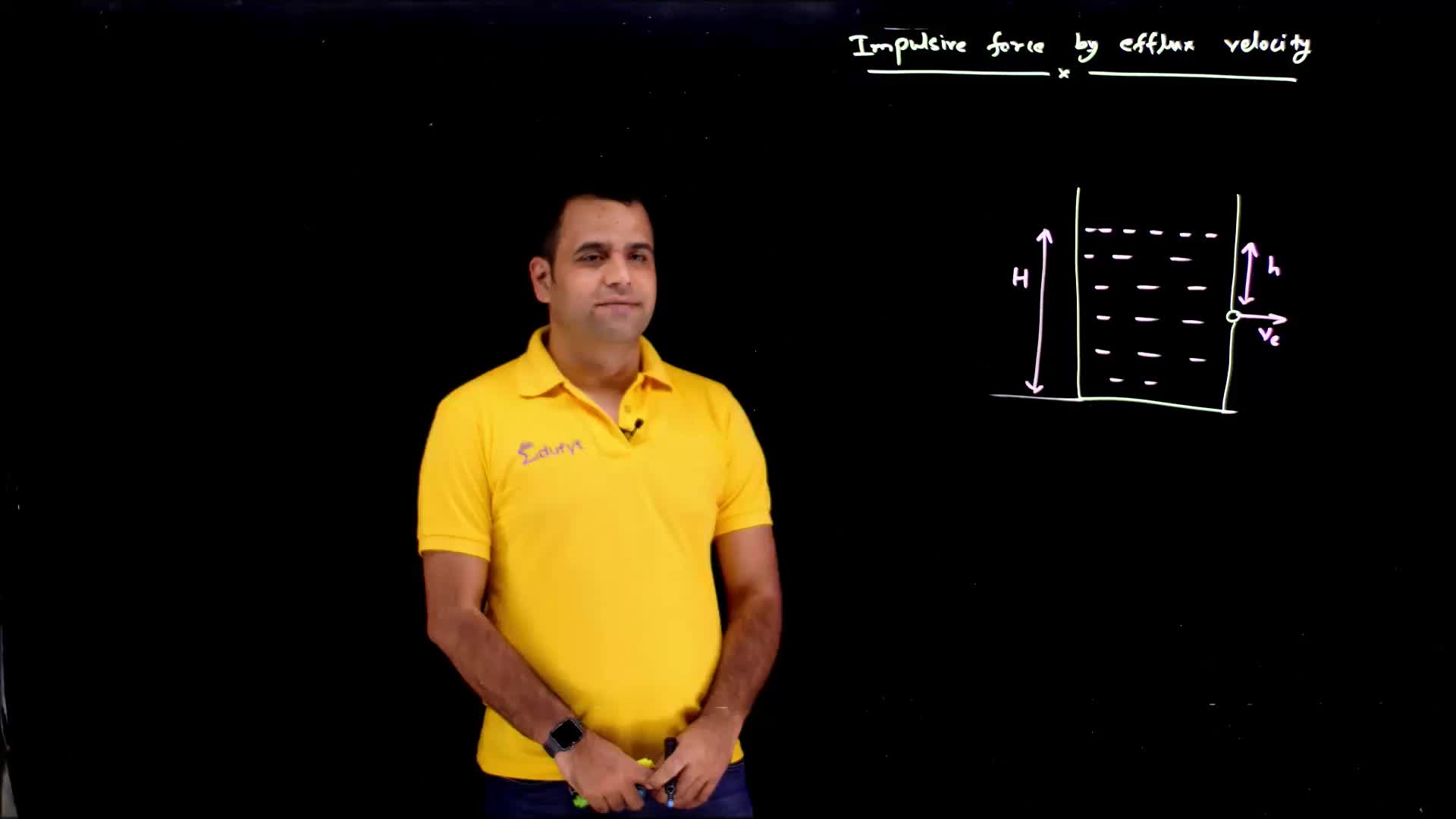
This video explains the concept of impulsive force generated by a liquid flowing out of a tank through a hole. It covers the calculation of this force using principles of velocity and momentum, and discusses how the force acts on both the liquid and the vessel. The video further explores factors influencing the impulsive force and the possible motion of the vessel.
|
|
|||
|
|
|||
|
|
|
|
|
Uploaded
|
|
0:00 |
|
|
|
|
0:05 | ||
|
|
0:10 |
|
|
|
|
0:15 | ||
|
|
0:20 | ||
|
|
0:25 |
|
|
|
|
0:30 | ||
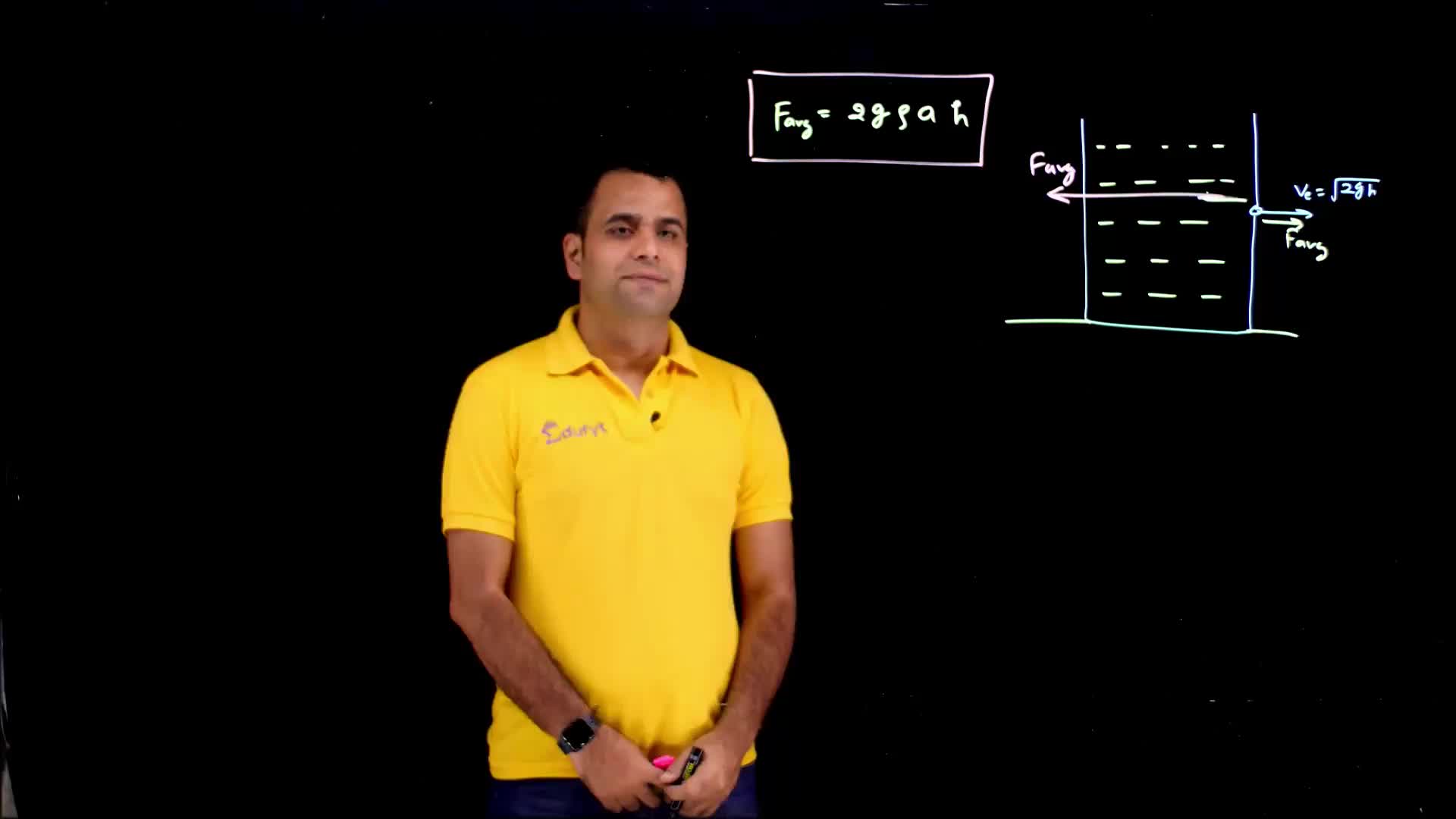
The lecture explores the mechanics behind the impulsive force caused by liquid ejection from a vessel and the conditions that might lead to toppling. It elaborates on the torque implications of the average force, F average, and how the shifting of normal reaction plays a crucial role in stabilizing the system.
|
|
|||
|
|
|||
|
|
|
|
|
Uploaded
|
|
0:00 |
|
|
|
|
0:05 | ||
|
|
0:10 |
|
|
|
|
0:15 | ||
|
|
0:20 | ||
|
|
0:25 |
|
|
|
|
0:30 | ||
This video explains the concept of viscosity in fluid dynamics, drawing a parallel to static and kinetic friction in classical mechanics. It describes how particles in a fluid move in layers and experience different forces due to friction. The progression from static to dynamic friction is explained, as well as the eventual steady state where forces equalize, resulting in a consistent velocity profile determined by the height (z-direction) in the fluid.
|
|
|||
|
|
|||
|
|
|
|
|
Uploaded
|
|
0:00 |
|
|
|
|
0:05 | ||
|
|
0:10 |
|
|
|
|
0:15 | ||
|
|
0:20 | ||
|
|
0:25 |
|
|
|
|
0:30 | ||
This video lecture delves into the concept of viscosity in fluid mechanics, focusing on the calculation of viscous force as a function of velocity profiles. The lecturer explains how, after achieving a steady state, velocity depends solely on the z-coordinate, leading to different velocity profiles and corresponding viscous forces. The formula for calculating viscous force, involving the cross-sectional area and velocity gradient, is derived, and its dependence on the coefficient of viscosity is highlighted. The unit conversion from poise to SI units is also discussed.
|
|
|||
|
|
|||
|
|
|
|
|
Uploaded
|
|
0:00 |
|
|
|
|
0:05 | ||
|
|
0:10 |
|
|
|
|
0:15 | ||
|
|
0:20 | ||
|
|
0:25 |
|
|
|
|
0:30 | ||
This video provides an in-depth explanation of Stokes Law and its application to calculating viscous force on spherical bodies. It explores conditions for applying Stokes Law and discusses different forces acting on a spherical body in a fluid. The video also explains the concept of terminal velocity and how it is achieved through the balance of forces.
|
|
|||
|
|
|||
|
|
|
|
|
Uploaded
|
|
0:00 |
|
|
|
|
0:05 | ||
|
|
0:10 |
|
|
|
|
0:15 | ||
|
|
0:20 | ||
|
|
0:25 |
|
|
|
|
0:30 | ||
This video lecture explains the concept of surface tension, why it's distinct from pressure, and its role in understanding the behavior of particles at fluid surfaces. It begins by highlighting the forces experienced by particles within a fluid compared to those at the surface, leading to the necessity of defining surface tension. The lecture further explains the properties and calculation of surface tension using a U-shaped wire and a sliding rail setup. It concludes with a summary of the properties of surface forces and their distinction from pressure forces.
|
|
|||
|
|
|||
|
|
|
|
|
Uploaded
|
|
0:00 |
|
|
|
|
0:05 | ||
|
|
0:10 |
|
|
|
|
0:15 | ||
|
|
0:20 | ||
|
|
0:25 |
|
|
|
|
0:30 | ||
This lecture delves into the concept of surface forces and their behavior on different surfaces. It explains how surface forces work perpendicular to the surface periphery, aiming to minimize the cross-sectional area. The lecture also differentiates between common understanding of a surface and its physical definition, highlighting the importance of identifying surfaces with abrupt density changes. The session concludes by focusing on calculating force on single surfaces before moving on to multiple surfaces, using vector and scalar addition where appropriate.
|
|
|||
|
|
|||
|
|
|
|
|
Uploaded
|
|
0:00 |
|
|
|
|
0:05 | ||
|
|
0:10 |
|
|
|
|
0:15 | ||
|
|
0:20 | ||
|
|
0:25 |
|
|
|
|
0:30 | ||
This video explains the concept of surface potential energy by comparing it with pressure potential energy, discussing its conservative nature, and outlining the method to calculate it using a U-shaped wire model. The video also derives a general formula for surface potential energy and simplifies it for practical use with single and multiple surfaces.
|
|
|||
|
|
|||
|
|
|
|
|
Uploaded
|
|
0:00 |
|
|
|
|
0:05 | ||
|
|
0:10 |
|
|
|
|
0:15 | ||
|
|
0:20 | ||
|
|
0:25 |
|
|
|
|
0:30 | ||
This video lecture explains the relationship between the inside and outside pressure across a spherical surface, accounting for surface tension and radius. It delineates the forces acting on a single spherical surface and elaborates on deriving the formula for pressure difference. Additionally, it touches upon situations involving multiple spherical surfaces.
|
|
|||
|
|
|||
|
|
|
|
|
Uploaded
|
|
0:00 |
|
|
|
|
0:05 | ||
|
|
0:10 |
|
|
|
|
0:15 | ||
|
|
0:20 | ||
|
|
0:25 |
|
|
|
|
0:30 | ||
This video explores the phenomenon of capillary rise, where a liquid rises or falls in a capillary tube due to adhesive and cohesive forces. It delves into the concepts of pressure differences across surfaces, discusses the role of the contact angle, theta C, and provides a mathematical framework to calculate the rise or fall of the liquid based on these factors.
|
|
|||
|
|
|||
|
|
|
|
|
Uploaded
|
|
0:00 |
|
|
|
|
0:05 | ||
|
|
0:10 |
|
|
|
|
0:15 | ||
|
|
0:20 | ||
|
|
0:25 |
|
|
|
|
0:30 | ||
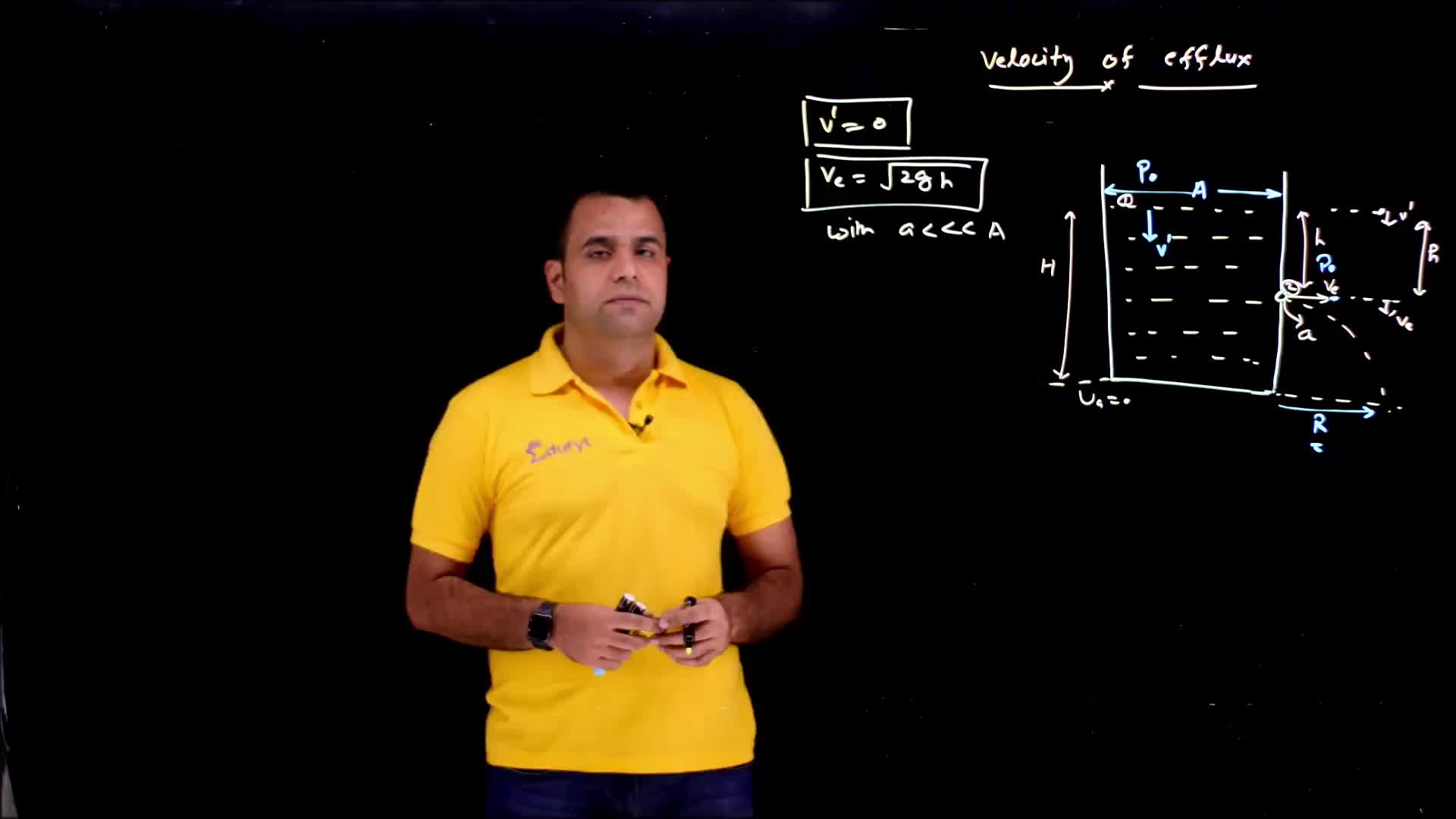
This video details the step-by-step guide on determining the range of liquid efflux by applying projectile motion principles. The instructor explains how to derive the time it takes for the liquid to hit the ground and how to use that information to calculate the range. The focus is on how the range changes with the height of the hole and how to calculate the maximum range possible.
|
|
|||
|
|
|||
|
|
|
|
|
Uploaded
|
|
0:00 |
|
|
|
|
0:05 | ||
|
|
0:10 |
|
|
|
|
0:15 | ||
|
|
0:20 | ||
|
|
0:25 |
|
|
|
|
0:30 | ||
The video discusses how atmospheric pressure is defined and calculated, as well as the instruments used for measurement.
|
|
|||
|
|
|||
|
|
|
|
|
Uploaded
|
|
0:00 |
|
|
|
|
0:05 | ||
|
|
0:10 |
|
|
|
|
0:15 | ||
|
|
0:20 | ||
|
|
0:25 |
|
|
|
|
0:30 | ||
The video explains how to calculate the pressure at a point in fluid mechanics if the pressure at another point is known. It explores the relationship between pressure and abrupt density changes across a surface, as well as how to calculate pressure according to depth.
|
|
|||
|
|
|||
|
|
|
|
|
Uploaded
|
|
0:00 |
|
|
|
|
0:05 | ||
|
|
0:10 |
|
|
|
|
0:15 | ||
|
|
0:20 | ||
|
|
0:25 |
|
|
|
|
0:30 | ||
This video discusses the concept of fluid statics and fluid pressure. It explains how to define and calculate fluid pressure, as well as the units of pressure measurements.
|
|
|||
|
|
|||
|
|
|
|
|
Uploaded
|
|
0:00 |
|
|
|
|
0:05 | ||
|
|
0:10 |
|
|
|
|
0:15 | ||
|
|
0:20 | ||
|
|
0:25 |
|
|
|
|
0:30 | ||