Calculation of Spring Constant with Cut Spring
< Back

Simple Harmonic Motion - Deepak Solanki | NoMoreClass

Welcome to the Simple Harmonic Motion channel with Deepak Solanki at NoMoreClass! In this channel, we explore the fundamental concepts of simple harmonic motion (SHM), a crucial topic in physics that describes the repetitive oscillatory motion of systems. Dive into comprehensive lessons covering key topics such as the characteristics of SHM, mathematical representation, energy in SHM, oscillations of springs and pendulums, and applications of harmonic motion. Deepak Solanki, a distinguished educator and author, presents these concepts through clear explanations, engaging demonstrations, and practical problem-solving strategies designed to enhance your understanding. This channel is specifically tailored for students preparing for competitive exams like JEE and NEET, ensuring you gain the knowledge and skills necessary to excel.
  • Calculation of Spring Constant with Cut Spring

    10:54

    The video discusses the calculation of the spring constant when a single spring is cut in an M N ratio. It provides equations for determining KM and KN in terms of the original spring constant K and the ratios M and N.

    Calculation of Spring Constant with Cut Spring

    AI wand icon
    Transcript translations are generated by AI.
    Please excuse mistakes in translation.
    timeline icon timeline icon timeline icon timeline icon
    Timeline
    Use the AI button above to generate, or click below to upload your own captions.
    AI transcript unavailable. Click below to upload your own captions.
    Click below to upload your own captions.

    Captions and Chapters
    Select a language then choose an option below to upload captions, chapters or add them manually.

    Uploaded
    0:00
    Chapter marker
    0:05
    0:10
    Chapter marker
    0:15
    0:20
    0:25
    Chapter marker
    0:30
  • Understanding Parallel Spring Combination

    08:07

    The video discusses parallel spring combinations and how to determine if the system will perform SHM. It also explains how to simplify the system and calculate the equivalent spring constant.

    Understanding Parallel Spring Combination

    AI wand icon
    Transcript translations are generated by AI.
    Please excuse mistakes in translation.
    timeline icon timeline icon timeline icon timeline icon
    Timeline
    Use the AI button above to generate, or click below to upload your own captions.
    AI transcript unavailable. Click below to upload your own captions.
    Click below to upload your own captions.

    Captions and Chapters
    Select a language then choose an option below to upload captions, chapters or add them manually.

    Uploaded
    0:00
    Chapter marker
    0:05
    0:10
    Chapter marker
    0:15
    0:20
    0:25
    Chapter marker
    0:30
  • Physical Pendulum Motion

    08:06

    The video explains the concept of physical pendulum motion, discussing the forces and torques involved, and the condition for simple harmonic motion (SHM) in physical pendulum motion.

    Physical Pendulum Motion

    AI wand icon
    Transcript translations are generated by AI.
    Please excuse mistakes in translation.
    timeline icon timeline icon timeline icon timeline icon
    Timeline
    Use the AI button above to generate, or click below to upload your own captions.
    AI transcript unavailable. Click below to upload your own captions.
    Click below to upload your own captions.

    Captions and Chapters
    Select a language then choose an option below to upload captions, chapters or add them manually.

    Uploaded
    0:00
    Chapter marker
    0:05
    0:10
    Chapter marker
    0:15
    0:20
    0:25
    Chapter marker
    0:30
  • Series Spring Combination

    11:50

    Learning about series spring combination, effective spring constant, and system performing SHM.

    Series Spring Combination

    AI wand icon
    Transcript translations are generated by AI.
    Please excuse mistakes in translation.
    timeline icon timeline icon timeline icon timeline icon
    Timeline
    Use the AI button above to generate, or click below to upload your own captions.
    AI transcript unavailable. Click below to upload your own captions.
    Click below to upload your own captions.

    Captions and Chapters
    Select a language then choose an option below to upload captions, chapters or add them manually.

    Uploaded
    0:00
    Chapter marker
    0:05
    0:10
    Chapter marker
    0:15
    0:20
    0:25
    Chapter marker
    0:30
  • Simple Harmonic Motion Analysis

    10:41

    The video discusses the analysis of simple harmonic motion, including the calculation of velocity and acceleration as functions of both time and position. The equations for velocity and acceleration are derived and explained, as well as the relationship between velocity, acceleration, and the position of the particle. Additionally, the conditions for simple harmonic motion are discussed in detail.

    Simple Harmonic Motion Analysis

    AI wand icon
    Transcript translations are generated by AI.
    Please excuse mistakes in translation.
    timeline icon timeline icon timeline icon timeline icon
    Timeline
    Use the AI button above to generate, or click below to upload your own captions.
    AI transcript unavailable. Click below to upload your own captions.
    Click below to upload your own captions.

    Captions and Chapters
    Select a language then choose an option below to upload captions, chapters or add them manually.

    Uploaded
    0:00
    Chapter marker
    0:05
    0:10
    Chapter marker
    0:15
    0:20
    0:25
    Chapter marker
    0:30
  • Simple Harmonic Motion: Calculating and Applying Formulas

    04:04

    This video explains the process of solving for simple harmonic motion (SHM) using formulas and equations. It discusses how to calculate the force, acceleration, and motion of a system in SHM and how to apply the derived formulas to solve problems.

    Simple Harmonic Motion: Calculating and Applying Formulas

    AI wand icon
    Transcript translations are generated by AI.
    Please excuse mistakes in translation.
    timeline icon timeline icon timeline icon timeline icon
    Timeline
    Use the AI button above to generate, or click below to upload your own captions.
    AI transcript unavailable. Click below to upload your own captions.
    Click below to upload your own captions.

    Captions and Chapters
    Select a language then choose an option below to upload captions, chapters or add them manually.

    Uploaded
    0:00
    Chapter marker
    0:05
    0:10
    Chapter marker
    0:15
    0:20
    0:25
    Chapter marker
    0:30
  • Introduction to Simple Harmonic Motion

    04:42

    The video introduces the equation for simple harmonic motion and discusses its various components and conditions. It also explains the relationship between angular frequency and time period, as well as the conditions required for studying simple harmonic motion.

    Introduction to Simple Harmonic Motion

    AI wand icon
    Transcript translations are generated by AI.
    Please excuse mistakes in translation.
    timeline icon timeline icon timeline icon timeline icon
    Timeline
    Use the AI button above to generate, or click below to upload your own captions.
    AI transcript unavailable. Click below to upload your own captions.
    Click below to upload your own captions.

    Captions and Chapters
    Select a language then choose an option below to upload captions, chapters or add them manually.

    Uploaded
    0:00
    Chapter marker
    0:05
    0:10
    Chapter marker
    0:15
    0:20
    0:25
    Chapter marker
    0:30
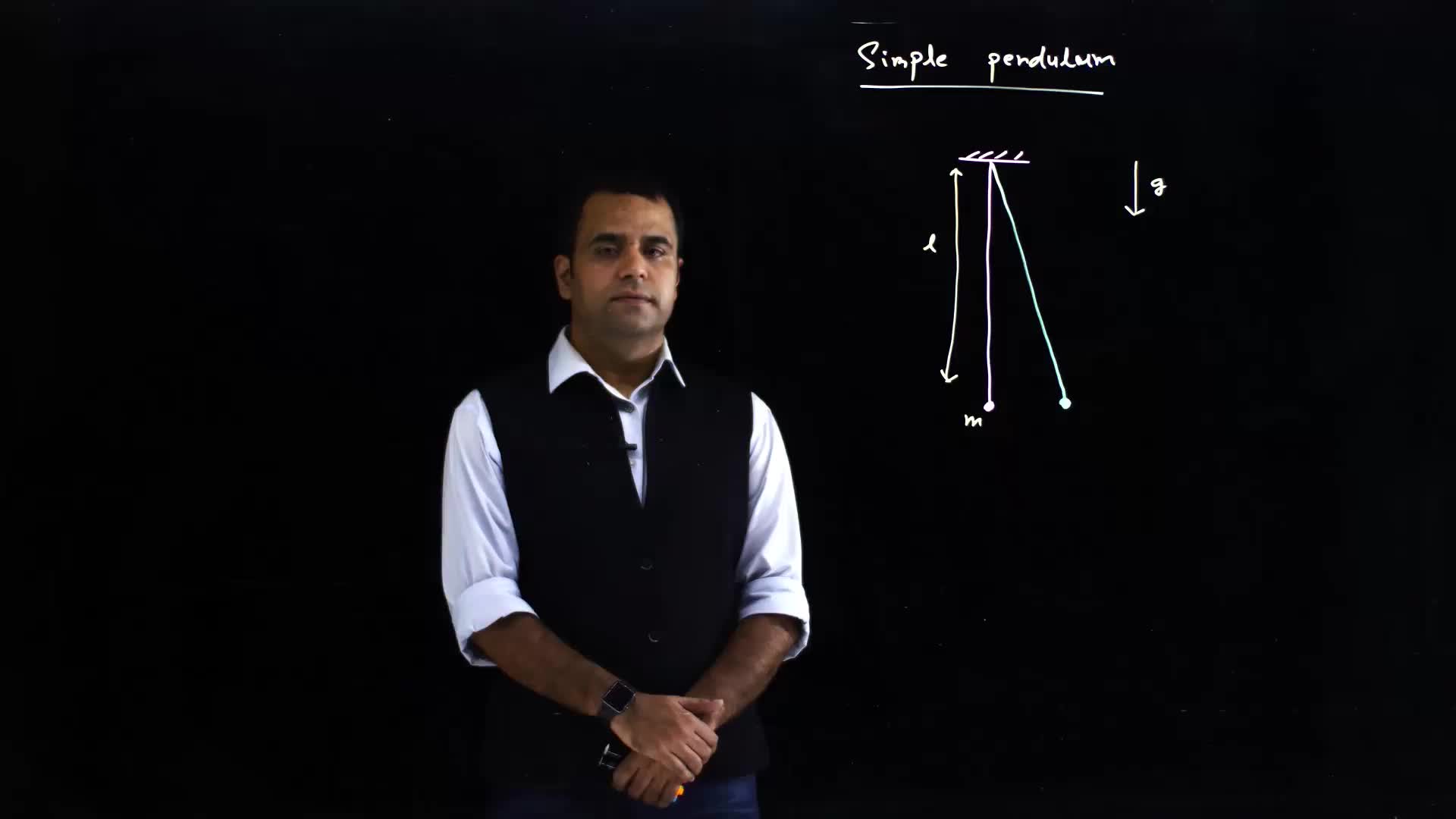
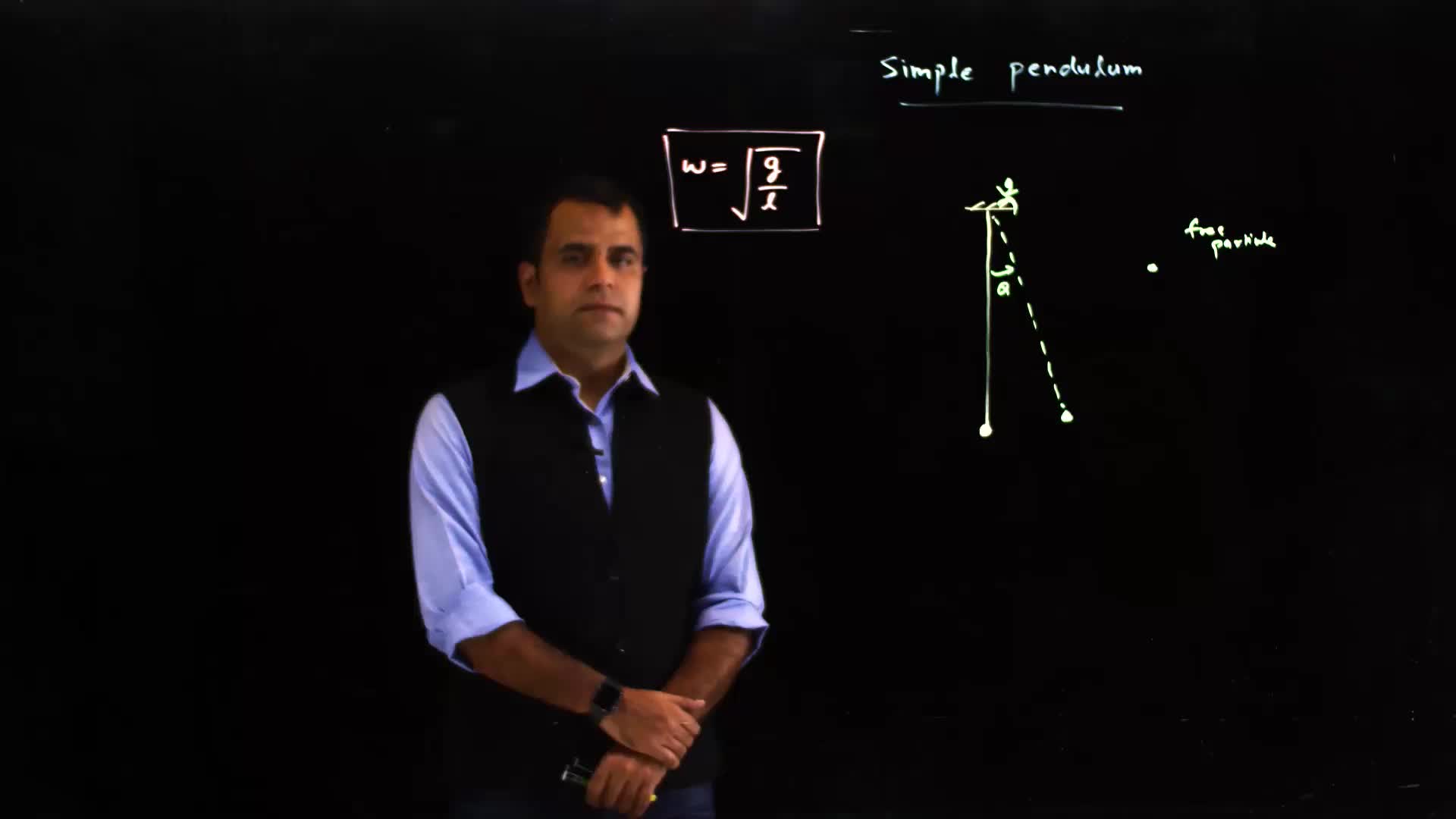
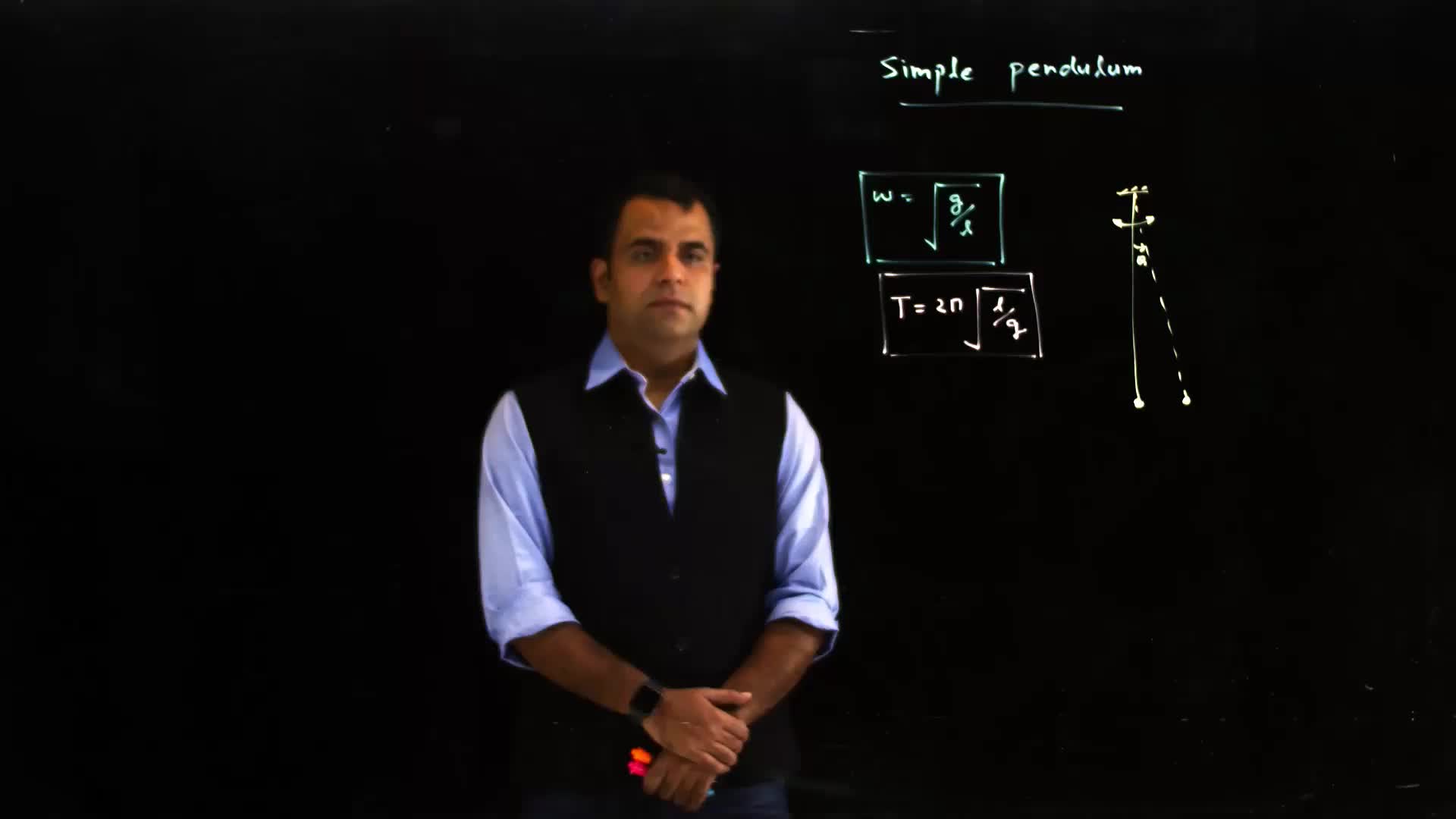
  • Motion of Simple Pendulum

    10:57

    The video discusses the motion of a simple pendulum, beginning with the setup of the device and the study of its motion. It then delves into the calculation of the restoring force, acceleration, and the equation for the motion of the simple pendulum. The video concludes with the explanation of how the time period and frequency of the simple pendulum are affected by external factors such as gravity.

    Motion of Simple Pendulum

    AI wand icon
    Transcript translations are generated by AI.
    Please excuse mistakes in translation.
    timeline icon timeline icon timeline icon timeline icon
    Timeline
    Use the AI button above to generate, or click below to upload your own captions.
    AI transcript unavailable. Click below to upload your own captions.
    Click below to upload your own captions.

    Captions and Chapters
    Select a language then choose an option below to upload captions, chapters or add them manually.

    Uploaded
    0:00
    Chapter marker
    0:05
    0:10
    Chapter marker
    0:15
    0:20
    0:25
    Chapter marker
    0:30
  • Tricks for Simple Pendulum with Acceleration

    14:07

    The video discusses tricks for calculating the behavior of a simple pendulum when it is subjected to different types of acceleration.

    Tricks for Simple Pendulum with Acceleration

    AI wand icon
    Transcript translations are generated by AI.
    Please excuse mistakes in translation.
    timeline icon timeline icon timeline icon timeline icon
    Timeline
    Use the AI button above to generate, or click below to upload your own captions.
    AI transcript unavailable. Click below to upload your own captions.
    Click below to upload your own captions.

    Captions and Chapters
    Select a language then choose an option below to upload captions, chapters or add them manually.

    Uploaded
    0:00
    Chapter marker
    0:05
    0:10
    Chapter marker
    0:15
    0:20
    0:25
    Chapter marker
    0:30
  • Tricks with Simple Pendulum

    11:49

    Learn about the changes in the formula for a simple pendulum when modifying the system by adding mass or acceleration. Also, discover the torque and differential equations when moving the hinge in different directions.

    Tricks with Simple Pendulum

    AI wand icon
    Transcript translations are generated by AI.
    Please excuse mistakes in translation.
    timeline icon timeline icon timeline icon timeline icon
    Timeline
    Use the AI button above to generate, or click below to upload your own captions.
    AI transcript unavailable. Click below to upload your own captions.
    Click below to upload your own captions.

    Captions and Chapters
    Select a language then choose an option below to upload captions, chapters or add them manually.

    Uploaded
    0:00
    Chapter marker
    0:05
    0:10
    Chapter marker
    0:15
    0:20
    0:25
    Chapter marker
    0:30
  • Introduction to Spring Mass System

    09:54

    A detailed explanation of how to calculate the time period and frequency for a spring mass system and determining whether simple harmonic motion is occurring. Includes the calculation of forces, formulation of the differential equation, and a discussion of the independence of Omega and time period from external factors.

    Introduction to Spring Mass System

    AI wand icon
    Transcript translations are generated by AI.
    Please excuse mistakes in translation.
    timeline icon timeline icon timeline icon timeline icon
    Timeline
    Use the AI button above to generate, or click below to upload your own captions.
    AI transcript unavailable. Click below to upload your own captions.
    Click below to upload your own captions.

    Captions and Chapters
    Select a language then choose an option below to upload captions, chapters or add them manually.

    Uploaded
    0:00
    Chapter marker
    0:05
    0:10
    Chapter marker
    0:15
    0:20
    0:25
    Chapter marker
    0:30
  • Simple Harmonic Motion and Circular Motion Connection

    10:56

    The video discusses the connection between simple harmonic motion (SHM) and circular motion. It explains how SHM components can be combined to create circular motion, and how circular motion can be broken down into SHM components. It also explores the importance of studying SHM and its connection to translatory and circular motion.

    Simple Harmonic Motion and Circular Motion Connection

    AI wand icon
    Transcript translations are generated by AI.
    Please excuse mistakes in translation.
    timeline icon timeline icon timeline icon timeline icon
    Timeline
    Use the AI button above to generate, or click below to upload your own captions.
    AI transcript unavailable. Click below to upload your own captions.
    Click below to upload your own captions.

    Captions and Chapters
    Select a language then choose an option below to upload captions, chapters or add them manually.

    Uploaded
    0:00
    Chapter marker
    0:05
    0:10
    Chapter marker
    0:15
    0:20
    0:25
    Chapter marker
    0:30
  • Calculation of Spring Constant with Cut Spring
    10:54
    Calculation of Spring Constant with Cut Spring
    10:54 >

  • Understanding Parallel Spring Combination
    08:07
    Understanding Parallel Spring Combination
    08:07 >

  • Physical Pendulum Motion
    08:06
    Physical Pendulum Motion
    08:06 >

  • Series Spring Combination
    11:50
    Series Spring Combination
    11:50 >

  • Simple Harmonic Motion Analysis
    10:41
    Simple Harmonic Motion Analysis
    10:41 >

  • Simple Harmonic Motion: Calculating and Applying Formulas
    04:04
    Simple Harmonic Motion: Calculating and Applying Formulas
    04:04 >

  • Introduction to Simple Harmonic Motion
    04:42
    Introduction to Simple Harmonic Motion
    04:42 >

  • Motion of Simple Pendulum
    10:57
    Motion of Simple Pendulum
    10:57 >

  • Tricks for Simple Pendulum with Acceleration
    14:07
    Tricks for Simple Pendulum with Acceleration
    14:07 >

  • Tricks with Simple Pendulum
    11:49
    Tricks with Simple Pendulum
    11:49 >

  • Introduction to Spring Mass System
    09:54
    Introduction to Spring Mass System
    09:54 >

  • Simple Harmonic Motion and Circular Motion Connection
    10:56
    Simple Harmonic Motion and Circular Motion Connection
    10:56 >